Hello! I am Misael Echeverría, and in my day-to-day work as Search Engine Marketing Lead at WeLoveWeb, I face one of the most exciting—and sometimes frustrating—challenges in modern marketing: Performance Max campaigns.
If you have made it this far, you probably already know that the Google ecosystem has changed. We no longer choose every bid or every keyword down to the last detail; now, we delegate much of the control to deep-learning algorithms.
However, letting AI run unsupervised is the perfect recipe for burning through your budget. That is why, today, I want to share my best Performance Max tips, based on managing multi-million-euro investments and many hours spent analysing what truly moves the needle on profit.
The paradigm shift: Why do you need a Performance Max strategy?
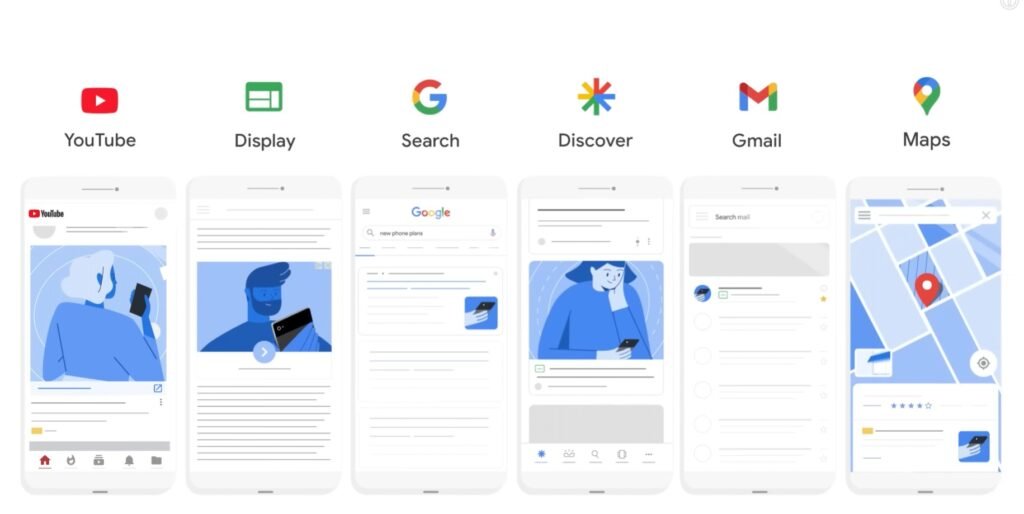
Gone are the days of hyper-segmented campaigns where we could see every corner of the account. Performance Max (PMax) is, essentially, a “black box” that combines Search, Display, YouTube, Discover and Gmail into a single campaign. But, as we often say at our Google Ads agency in Spain, AI is like a Formula 1 car: without a good driver, you crash on the first corner.
Inbound marketing and SEM have converged. We are no longer just trying to “show up”; we are aiming to be relevant at the precise moment. According to research on the effectiveness of automation in digital advertising, AI can improve operational efficiency by up to 30%, but only if the input data is of the highest quality.
1. Assets are the new “targeting”
In Performance Max, you do not choose where you appear, but you do control what the user sees. The first major mistake is using mediocre assets.
- Professional video: If you do not upload a video, Google will create an automatic one from your photos, which is usually, to be honest, quite ugly. Upload high-quality videos in horizontal, vertical (for Shorts) and square formats.
- Headlines and descriptions: Do not repeat the same thing. Use variations that address different levels of user awareness.
- Images with intent: Avoid generic stock photos. At WeLoveWeb, we always recommend real product or service photos that convey trust.
2. Audience signals: Give the algorithm the map
One of the most critical Performance Max tips is understanding that “Audience Signals” are not fixed targeting, but a suggestion. Do not skimp on first-party data. Upload your customer lists (Customer Match) and your site-visitor audiences. According to the IAB Spain advertising investment report, personalisation based on first-party data is the fastest-growing trend in Spain to counter the loss of cookies.

3. Conversion tracking must be flawless
If AI does not know what a sale is, it will optimise for junk clicks. Before launching anything, make sure you set up conversion tracking correctly in 2026. Implement Enhanced Conversions to recover the data lost due to privacy restrictions.
4. Structure “Asset Groups” by theme or value
Do not put everything into a single asset group. If you sell trainers and T-shirts, create separate groups. AI needs visual and messaging consistency. If a user is searching for trainers and sees an ad for T-shirts because they are in the same group, relevance drops and your CPA rises.
5. Budget and bidding strategies
Performance Max needs “room” to breathe. You cannot set a budget of €10 a day and expect miracles. As a general rule, your daily budget should be at least 10 times your target CPA. In addition, it is essential to know when to use each option.
We are in the process of publishing a comparison of Smart Bidding vs Manual Bidding to understand when it is time to let go of the reins or when to keep manual control, so I recommend that you come back soon to the WeLoveWeb blog.
6. Brand exclusions and negative keywords
One of my clients’ biggest fears is appearing on sites they should not, or paying for their own brand name when they already rank in SEO.
- Brand exclusion list: Set it up at account level to avoid cannibalising your organic traffic, if you choose to do so.
- Account-level negatives: Use negative keywords in Ads to filter out search terms that do not convert, such as “free”, “jobs” or competitors you are not interested in.
7. Use the “Insights” page weekly
Google gives you clues about what is working. Review the search terms triggering your ads and the audience segments converting best. This data is pure gold for feeding your other traditional search campaigns or your content strategy.
8. The impact of design on conversion
It does not matter how many Performance Max tips you apply if your landing page is slow or confusing. User experience is the final link in the chain. Before investing heavily, make sure you carry out a step-by-step Google Ads audit that includes reviewing your landing pages. If the user arrives and leaves, you will have paid for the click for nothing.
9. Google Ads or social media? True omnichannel
Performance Max already reaches YouTube and Gmail, but should you invest only there? In my experience, the ideal approach is to combine channels. I invite you to read our analysis on Google Ads vs Meta Ads: Where should you invest in 2026? to build a balanced media plan.
10. Patience is a virtue (and a KPI)
Do not touch the campaign during the first 2–3 weeks. The learning phase is real. Every time you make an abrupt change, the algorithm resets to zero. As I always say in meetings with our clients at our Google Ads agency in Spain, success in PMax is measured in months, not days.
If your campaign has a low optimisation score, do not rush to apply all of Google’s suggestions blindly. Consult our guide on the optimisation score in Ads to determine which recommendations are worth it and which are simply ways for Google to spend more.
Conclusion: AI is your ally, not your replacement
Mastering these campaigns requires a mix of technical analysis and creativity. Do not underestimate the power of visual assets or the importance of a strong data feed if you run an eCommerce store. The future of advertising lies in Google Performance Max, but the competitive advantage will be yours if you apply these Performance Max tips with sound judgement.
Remember that in this digital world, if you are not moving forward, you are falling behind. Do not stop testing, measuring and, above all, questioning the data.
Would you like to take your Google Ads campaigns to the next level?
At WeLoveWeb, we specialise in getting the most out of every euro of your advertising investment. If you feel your Performance Max campaigns are not delivering the results you expected, or if you want to start off on the right foot with certified experts, we are here to help.
As a Google Ads agency in Spain, we design tailored strategies that combine the power of AI with the human touch your business needs. Contact us today and request an audit of your account.
FAQ: Frequently asked questions about Performance Max tips
It is not the most recommended option for budgets below €500–€1,000 per month, as AI needs a minimum volume of data (conversions) to learn and optimise properly.
Although Performance Max is more restrictive, you can use account-level content and placement exclusions to filter app categories that often generate accidental, low-quality traffic.
No, they complement each other. Search campaigns with exact match usually take priority over PMax. Ideally, use PMax to capture traffic in inventories you cannot reach with manual Search.
Yes, there is a specific “New customer acquisition” setting that allows you to bid higher for users who have never purchased on your website, or even focus exclusively on them.
Without a doubt, video and images. Search is saturated; standing out visually on YouTube and the Display Network is what makes the difference in CTR and in the final volume of conversions.