Hello! I am Juanma Nieto, Head of Branding, Web Design, and Digital Marketing at WeLoveWeb. If you are reading this, it is probably because you feel that the ground beneath your feet is moving faster than usual. I do not blame you. The landscape we manage today is radically different from just two years ago.
It is 2026, and we are no longer talking about “adapting” to technology; we are talking about digital marketing strategies 2026 that integrate artificial intelligence not as an assistant, but as an autonomous agent capable of making real-time decisions. In this article, I want to share with you my personal and professional vision on how brands are winning —or losing— the battle for attention in this new ecosystem.
1. The Transition to Agentic AI: From “Creating” to “Managing”
At the end of 2024, we were frantically generating texts and images with prompts. Today, successful digital marketing strategies 2026 are based on Agentic AI and the relentless pursuit of improving user experience (UX). We no longer just ask a machine to write a post; we have systems that analyze user behavior, detect a drop in conversion on a landing page, and autonomously propose and execute an A/B test by adjusting the copy and design.
This has changed my day-to-day at WeLoveWeb. My focus has shifted from tactical execution to strategic and creative oversight. According to McKinsey’s State of Marketing Europe 2026 report, companies that have integrated AI agents into their processes have seen a 40% increase in operational productivity.
What does this mean for you? It means that if your strategy is still based on publishing for the sake of publishing, you are out. The real value now lies in data curation and training your own AI models with your brand’s unique voice and values.
2. GEO: The New SEO You Must Master
If you are still trying to rank only for Google as we knew it, I have news for you: Traditional SEO, while not dead as some “experts” suggest, has evolved. Now, Answer Engines rule. Digital marketing strategies 2026 must focus on Generative Engine Optimization (GEO).
Users no longer click on ten blue links. They ask complex questions and receive direct answers generated by models like SearchGPT or Google Gemini. For your brand to appear in those answers, simply repeating keywords is no longer enough. You need:
- Real Authority (E-E-A-T): Google prioritizes sources with demonstrable expertise.
- Advanced Structured Data: For AI to understand what you sell and why you are better.
- Opinion and Niche Content: AI is excellent at summarizing general information, but mediocre at providing critical insight. That is where human value lies.
At our online digital marketing agency, we have found that content that includes proprietary case studies and original data is 70% more likely to be cited by AI responses.
3. Radical Privacy: “No Consent, No Party”
If anything defines digital marketing strategies 2026 in Spain (and the rest of Europe), it is absolute respect for privacy. Following the definitive disappearance of third-party cookies and the tightening of European regulations, First-party data (your own data) is the new gold.
We are seeing the rise of Data Clean Rooms. Recent research, such as the academic study GenAI Explainability in Marketing Strategy Co-Creation, published on research platforms like Arxiv and various specialized journals, emphasizes that transparency in data usage is not only legal but also a critical conversion factor.
The 2026 user is extremely protective of their privacy but is willing to provide data if they receive hyper-relevant personalization in return.
4. Social Commerce and “AI Fatigue”
Curiously, the more AI we inject into marketing, the more we value the human element. At WeLoveWeb, we have noticed a fascinating trend: brands that show “friction,” imperfections, and human faces are breaking engagement records.
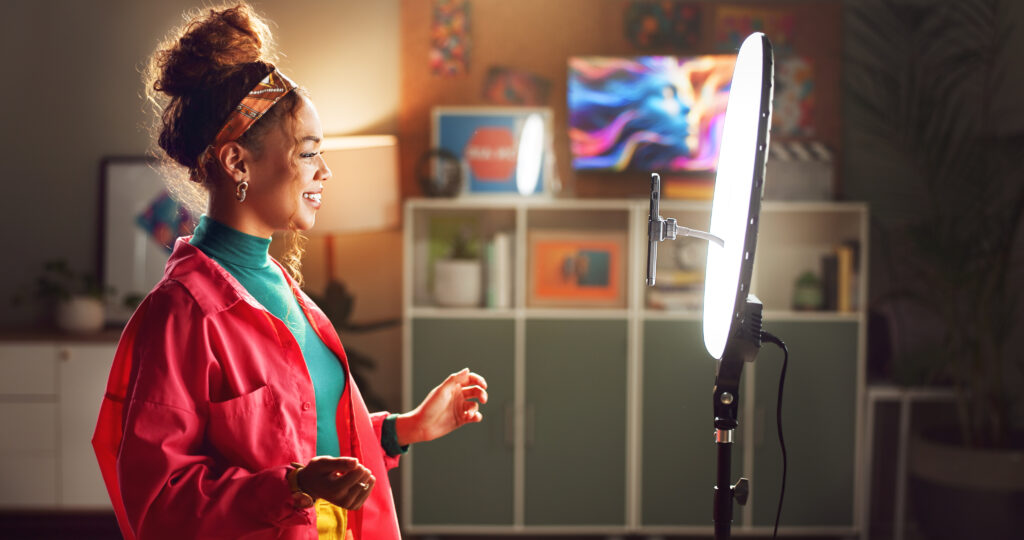
Social Commerce has matured. It is no longer just about putting a buy button on Instagram. Digital marketing strategies 2026 integrate Live Shopping with human hosts supported by support chatbots that close the sale in the same chat. It is a mix of human warmth and algorithmic efficiency.
Practical recommendation: Do not automate your community. Use AI to analyze what topics interest them, but let a real person (or an avatar with a very defined and honest personality) lead the conversation.

5. Audit Your Digital Marketing Strategies 2026 (Checklist)
To ensure this article goes beyond theory, I want you to be able to audit your current situation. Here are 5 key points we always review at WeLoveWeb:
- Do you have a robust proprietary database? If Google and Meta shut down tomorrow, do you have a way to contact your customers? If the answer is no, your number one priority is email marketing and loyalty programs.
- Does your website load in under 1 second? In 2026, speed is not a ranking factor; it is a condition for existence. We use Edge Computing tools to ensure every millisecond counts.
- Are you optimizing for voice and visual search? People no longer type; they speak to their smart glasses or take photos of products to find them. Your images must be perfectly tagged.
- Does your content provide unique value? If an LLM (like ChatGPT) can write your article in 5 seconds without your help, that content has no SEO or GEO value.
- Do you measure attribution omni-channel? The buying journey is chaotic (The Messy Middle). You must use data-driven attribution models to understand that the TikTok video from a month ago was what initiated today’s sale.
Research from authoritative sources like Think with Google confirms that brands achieving a consistent user experience across all touchpoints increase their customer lifetime value (LTV) by 33%.
6. Conclusion: The Era of Hybrid Strategy
Ultimately, digital marketing strategies 2026 are not about choosing between humans or machines. They are about creating a symbiosis. As a Branding and Design expert, I tell you that brand identity is more important than ever today. In a sea of AI-generated content, your “why” and your unique visual style are the only lifelines you have left.
Do not be afraid to experiment with new tools, but never lose sight of the fact that, on the other side of the screen, there is still a person with real desires, fears, and needs.
Do you want to take your brand to the next level in 2026?
At WeLoveWeb, we do not just observe trends: We create them. If you feel your company needs a real boost, a strategy that combines cutting-edge design with the latest marketing innovations, we are here to help you.
As a leading online digital marketing agency, we specialize in transforming traditional businesses into leaders in the digital ecosystem. Do not let the future catch you unprepared.
Click here to learn about our Digital Marketing services and let’s discuss your project.
Frequently Asked Questions (FAQ): Digital Marketing Strategies 2026
The main thing is the combination of Agentic AI for efficiency and a strong brand identity for differentiation. It is no longer enough to be visible: You must be relevant and trustworthy in an environment where content is abundant but attention is scarce.
GEO forces brands to stop writing for keywords and start writing to solve complex problems. If your content is the best answer an AI can find for a user’s query, you will appear as the recommended source.
More than ever. In 2026, web design is not just aesthetics: It is user psychology and technical performance. A slow or difficult-to-use website nullifies any advertising or content investment you make.
It is central. After the end of third-party cookies, companies must focus on capturing First-party data ethically. Brands that do not respect user privacy will lose their trust and, therefore, their sales.
No. The trend in 2026 is channel specialization. It is better to master one or two platforms where your active community truly resides than to have a mediocre and automated presence everywhere.