Often, in meetings with our clients, the same question comes up: “Is it enough to install a translation plugin and that’s it?” My answer is always an emphatic “no.” Multilingual web development is much more than running text through AI or hiring a translator; it is a matter of architecture, SEO strategy and, above all, trust. In this article, I want to share, based on my experience, how we approach these projects so they are not only “read” in other languages, but also convert.
I am Peter Cuber, Project Manager at WeLoveWeb. If you have made it this far, your business is likely outgrowing a single country or, quite simply, you have understood that the digital market in 2026 does not recognize borders, but languages.
Why is multilingual web development the engine of your expansion?
In today’s ecosystem, personalization is everything. It is not only about the user understanding what you sell, but about them feeling that you are speaking to them, in their context. According to various studies on consumer behavior, most users prefer to shop on sites that offer information in their native language, even if they are fluent in other languages.
When we plan an international-scale corporate web design, multilingual web development must be the central pillar. It is not a last-minute add-on: it must be in the code’s DNA from day one. If you do it well, you will multiply your visibility. If you do it poorly, Google could penalize you for duplicate content or, even worse, you could drive away potential customers with a confusing user experience.

Technical architecture: Where should you host your international website?
As a project lead, one of the first technical decisions I make with my team is the URL structure. There is no one-size-fits-all solution, but there is one that tends to work better depending on your multilingual web development objectives.
- Subdirectories (e.g., weloveweb.eu/en/): This is our preferred option for most cases. It allows you to consolidate all domain authority in a single main URL, which makes ranking easier. It is also simpler to maintain from the perspective of semantic SEO and entities.
- Subdomains (e.g., en.weloveweb.eu): Useful if the different versions of the website will have very different content or functionality, but they split domain authority.
- Top-level domains (ccTLDs, e.g., weloveweb.pt): This is the strongest signal to Google that a site is intended for a specific country, but maintenance costs and brand management increase dramatically.
Whichever option you choose, multilingual web development requires flawless implementation of hreflang tags. These tags tell Google: “Hey, this page is in Spanish for people in Spain, and this other one is the version for people in Portugal.” Without them, the search engine gets confused and your traffic suffers.
The human factor in translation
This is where rigor comes in. At WeLoveWeb, we strongly believe that content must demonstrate Experience, Authority, and Trust (E-E-A-T). In a multilingual web development project, this means you cannot blindly rely on automatic translations.
Imagine you are looking for a legal service in Spain and the website uses Latin terms that are not used here, or vice versa. Distrust is immediate. That is why localization is more important than translation. Localization adapts units of measurement, date formats, currency, and, most importantly, cultural tone.
For multilingual web development to be effective, we must follow international internationalization standards, such as those set by the W3C (World Wide Web Consortium). This ensures the code can handle different character sets, reading directions (such as Arabic), and regional formats without breaking.
Speed and accessibility: Do not leave anyone behind
There is no point in having brilliant content in five languages if the website takes forever to load on another continent. In our multilingual web development approach, WPO optimization is critical. We use content delivery networks (CDNs) so that whether a user visits from Lisbon or Barcelona, load times are reduced to a minimum.
In addition, we must not forget regulations. Web accessibility in 2026 is mandatory for almost any company that wants to operate in the EU. Good multilingual web development must be inclusive. This includes everything from the correct use of lang attributes in HTML to ensuring screen readers can navigate the language selector easily.
Practical tips for your language selector
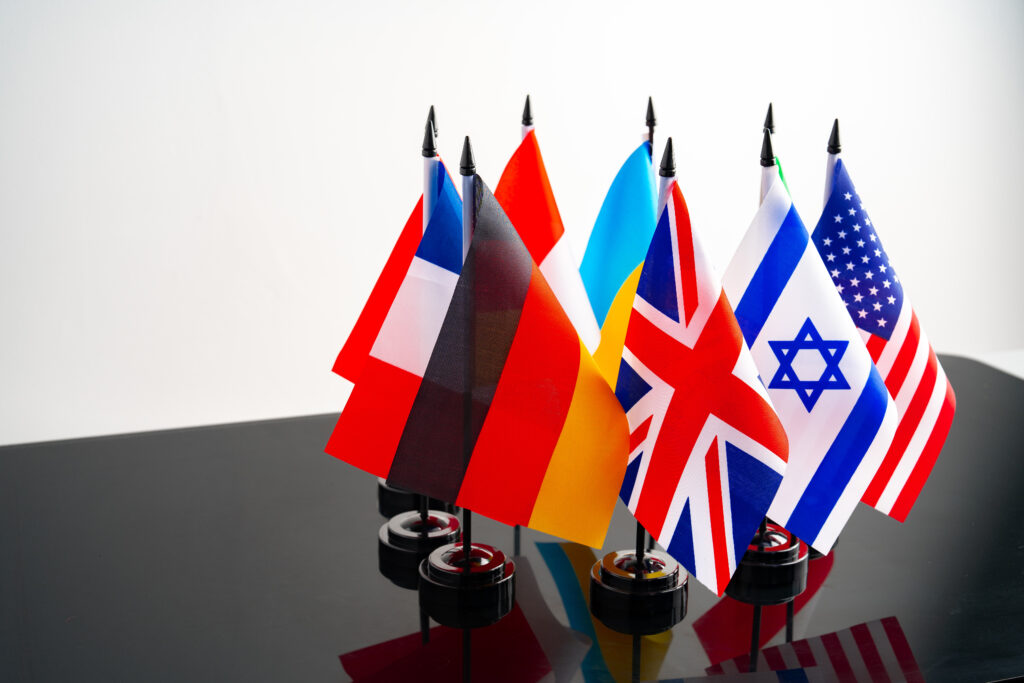
- Do not use flags: A flag represents a country, not a language. A user from Mexico does not necessarily identify with the Spanish flag. Use the language name in its own language (e.g., “Português” instead of “Portugués”).
- Visible placement: Always place it in the top right or in a persistent menu. The user should not have to “search” for how to understand you.
Quick audit for your multilingual web development
If you already have an international website or are considering launching one, I propose a small exercise. Review these points to see whether your strategy is on the right track:
- Do you have mixed content? If your English version includes phrases in Spanish, you are losing professionalism.
- Are images localized? If a photo has embedded text, make sure it changes according to the selected language.
- Does the internal search work? A common mistake: the search only returns results in the main language. Good multilingual web development indexes each version separately.
- Are forms dynamic? Postal codes or phone number formats vary by country. Do not frustrate users with impossible validation rules.
Academic studies suggest that the brain processes information much more positively and with a lower cognitive load when it is presented in the native language, which directly translates into a higher conversion rate for your business.
Go global with WeLoveWeb
At WeLoveWeb, we understand that multilingual web development is the bridge between your product and the world. My role as Project Manager is to ensure that bridge is solid, fast and, above all, profitable for you. It is not only about coding; it is about understanding your business and projecting it internationally with corporate web design that matches your ambitions.
If you are looking for a team that not only speaks code, but understands markets and people, you are in the right place. We would be delighted to hear about your project and help you design the strategy that will allow you to compete anywhere on the planet.
Optimize your presence with our Digital Marketing service
Would you like your website to be more than a business card? At WeLoveWeb, we turn your online presence into a customer acquisition engine, regardless of language or market. Explore our digital marketing and web design services here.
Frequently Asked Questions (FAQ): Keys to multilingual web development
Yes. If hreflang tags are not managed correctly, or if duplicate content is generated without canonical tags, Google can become confused and lower the ranking of all your versions. That is why expert technical implementation is essential.
It depends on the architecture. Subdirectories are the most cost-effective to maintain. The main cost usually comes from creating and updating high-quality content in each language, rather than the technical infrastructure once it is in place.
You can use it as a starting point, but we always recommend professional human review. For your site’s E-E-A-T, it is essential that the language is natural and correct. A poor translation can ruin your brand’s reputation in a new market.
If the technology foundation is solid, adding an additional language can take a few weeks. However, if the entire site architecture needs to be restructured, the process can take longer to ensure current rankings are not lost.
The answer lies in your data. Check in Google Analytics which countries you are currently receiving visits from. If you are getting a lot of traffic from Portugal, that should be your next step in multilingual web development to close those sales.