Market research is a crucial aspect of any business, providing valuable insights into customer needs, wants, and preferences. It helps companies make informed decisions, identify market opportunities, and develop effective marketing strategies.
However, market research is not a simple process, and there are several characteristics of market research that businesses must consider to ensure they conduct effective research. In this article, we will cover several topics and questions.
You will discover what market research is, how to do market research, and how to evaluate the results of your market research.
The objective of market research
The objective of market research is to provide businesses with valuable information about the needs, wants, and preferences of their customers. The insights gained from market research can be used to identify market opportunities, develop effective marketing strategies, and make informed business decisions. The goal of market research is to ensure that businesses have the information they need to succeed in a competitive market.
Companies use market research in a variety of ways. First, market research is used to identify market opportunities. By conducting research, companies can identify gaps in the market, new trends, and emerging customer needs. This information can be used to develop new products or services that meet customer needs.
Second, market research is used to develop effective marketing strategies. By understanding the needs and preferences of their customers, businesses can create more focused and effective marketing campaigns. Market research can provide valuable information about the most effective marketing channels, the message that resonates with customers, and the most appropriate marketing budget.
Third, market research is used to make informed business decisions. By conducting research, companies can gather the information they need to make informed decisions about product development, pricing, distribution, and branding. Market research can provide companies with the information they need to make decisions based on data and information rather than assumptions or opinions.
Characteristics of market research
The first characteristic of market research is that it is systematic. Market research is carried out through a specific process that involves the collection, analysis, and interpretation of data. This process must be consistent and repeatable to ensure that the results are reliable and accurate.
The second characteristic is that market research is objective. Research should be conducted without any bias, personal opinions, or preconceived ideas that may influence the results. It is essential to maintain objectivity to ensure that the data collected is representative of the population studied.
The third characteristic of market research is that it is empirical. This means that it is based on direct observation or experience. Market research is based on data and facts rather than assumptions or opinions. The data collected must be relevant, reliable, and valid.
The fourth characteristic of market research is that it is analytical. The data collected must be analyzed and interpreted to draw conclusions and make informed decisions. This process involves statistical analysis, data visualization, and data interpretation.
Types of market research
There are four types of market research: exploratory, descriptive, causal, and predictive.
- Exploratory research is used to identify and define a problem or opportunity.
- Descriptive research is used to describe a market or demographic.
- Causal research is used to determine cause-and-effect relationships.
- Predictive research is used to forecast future trends and behaviors.
There are many examples of market research, such as surveys, focus groups, interviews, observations, and experiments. Surveys are one of the most common forms of market research, and consist of asking a set of questions to a group of people. Focus groups involve gathering a group of people to discuss a particular topic or product. Interviews are conducted individually and consist of asking a set of questions. Observations involve observing people’s behavior, and experiments involve testing a product or service in a controlled environment.
Methods in market research
Market research methods include primary research and secondary research.
- Primary research involves collecting data directly from the source, while secondary research involves collecting data from existing sources such as publications, databases, and reports. Primary research methods include surveys, focus groups, interviews, observations, and experiments.
- Secondary research methods include desk research, competitor analysis, and industry reports.
Good market research involves several key factors. First, it must be efocused on the specific objectives of the business. The research should be designed to answer specific questions and provide practical information.
Second, the research should be conducted using reliable and valid methods. The data collected must be relevant, accurate, and representative of the population studied. Third, the research should be conducted within the budget and timeframe of the business. It is essential to have a clear plan and budget in place to ensure that the research is completed on time and within budget.

How to get started with market research
Starting a market research project involves several steps. First, it is essential to define the objectives of the research. This involves identifying the problem or opportunity and determining the specific questions that need to be answered.
Second, it is important to identify the target market or demographic on which the research will focus. This involves determining the characteristics of the population studied and the required sample size.
Third, it is important to determine the research methods that will be used to collect data. This involves selecting the appropriate methods based on the research objectives and the target market.
Fourth, it is important to design the research instrument. This involves creating the survey questions, focus group discussion guides, or interview scripts that will be used to collect data. The research instrument should be designed to ensure that the data collected is relevant, accurate, and representative of the population studied.
Fifth, it is important to collect the data. This involves administering surveys, conducting focus groups or interviews, or observing people’s behavior. It is essential to ensure that the data collection process is consistent and that the data collected is valid and reliable.
Sixth, it is important to analyze the data. This involves organizing the data, calculating statistical measures, and drawing conclusions. The data should be analyzed using appropriate statistical software and techniques.
Finally, it is essential to report the results. This involves presenting the research results in a clear and concise manner. The report should include an executive summary, an introduction to the research, the methodology used, the research results, and recommendations based on the findings.
Step-by-step guide on how to do market research
Define your objectives:
The first step in any market research project is to define your objectives. Let’s say you are a restaurant looking to make renovations, your objectives might include understanding your target market, identifying the most effective marketing channels, and determining the most effective pricing strategy.
Identify your target market:
Once you have defined your objectives, the next step is to identify your target market. This could include people who live in the surrounding area, people who have visited the restaurant in the past, or people who have expressed interest in dining at your restaurant. There are several online tools that can help you identify your target market, such as Google Analytics, Facebook Insights, and SurveyMonkey, or Audience.
Choose your research methods
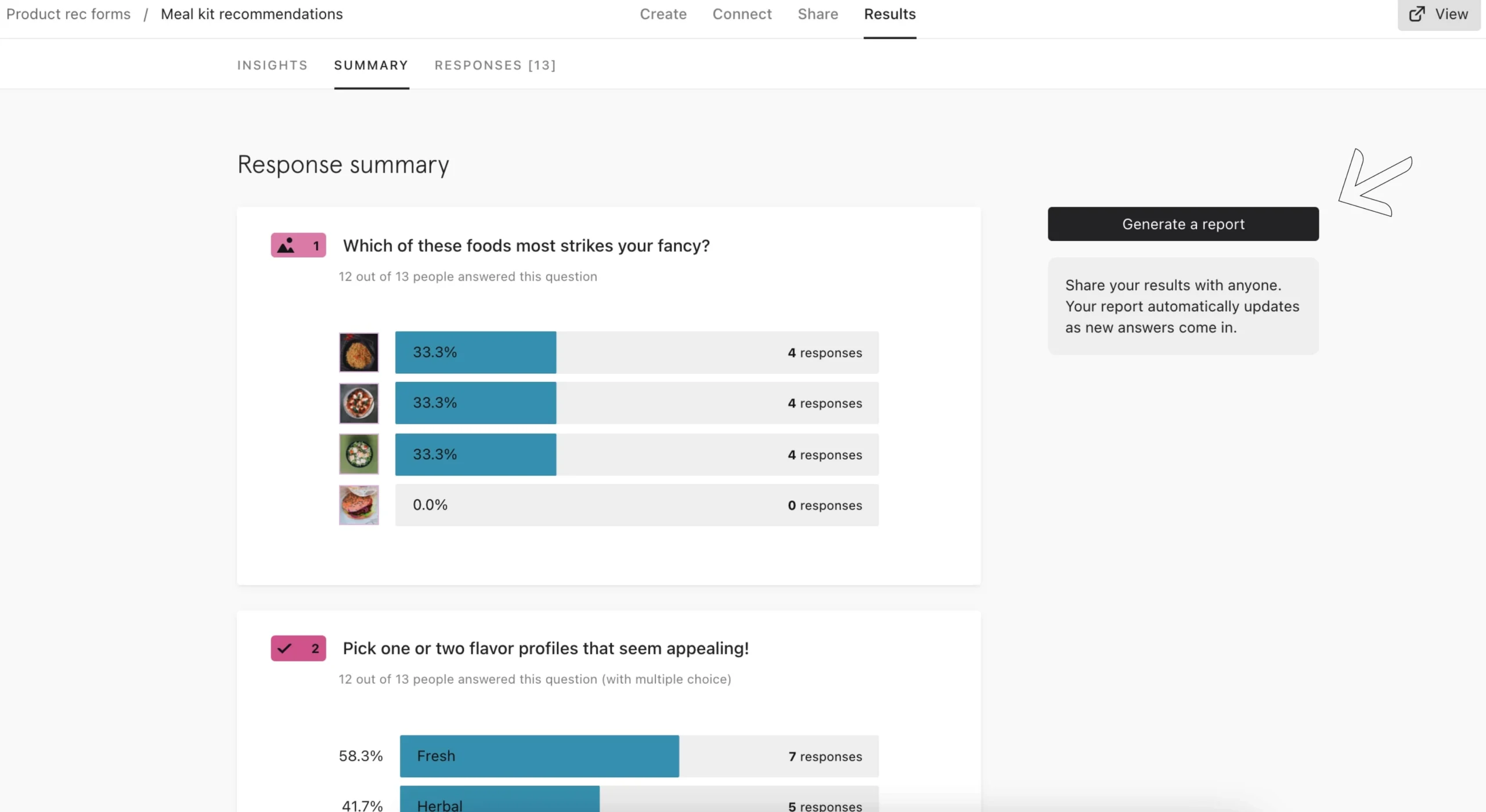
Select your research methods After identifying your target market, the next step is to select your research methods. Some common research methods for restaurants include surveys, focus groups, and online reviews.
Surveys are a great way to collect feedback from your customers and can be conducted using online tools such as SurveyMonkey or Google Forms.
Focus groups are a more detailed research method that involves gathering a group of people to discuss a particular topic. Online reviews can also provide valuable feedback on your restaurant’s service, menu, and atmosphere.
Design your research instrument Once you have chosen your research methods, the next step is to design your research instrument. This may include creating survey questions, discussion guides for focus groups, or requests for online reviews. It is important to design your research instrument carefully to ensure that you are collecting relevant, accurate, and representative data.
Example
Here is an example of how a restaurant might design a research instrument to gather feedback from its customers:
- Start the survey with an introduction that explains the purpose of the survey and how the results will be used. For example: “Thank you for taking the time to complete this survey. We are conducting this research to better understand the needs and preferences of our customers, and your feedback will help us improve our restaurant and services.”
- Ask demographic questions to understand the characteristics of your customers, such as their age, gender, income, and location. This information can be used to identify patterns and trends in the data. For example: “What is your age?” or “What is your annual household income?”
- Ask about the customers’ experience at the restaurant to understand their preferences and identify areas for improvement. For example: “How often do you eat at our restaurant?” or “How satisfied are you with the quality of our food?”
- Ask about the atmosphere of the restaurant to understand customers’ perceptions and preferences. For example: “How would you rate the ambiance of our restaurant?” or “How comfortable are our seating arrangements?”
- Ask about prices to understand customers’ willingness to pay and to identify opportunities for price optimization. For example: “How would you rate the value for money at our restaurant?” or “Would you be willing to pay more for higher quality ingredients?”
- Finally, provide an open-ended question or section to allow customers to provide additional feedback. This can be a valuable source of qualitative data and can help identify specific problems or opportunities for improvement. For example: “Is there anything else you would like to share about your experience at our restaurant?”
Collect your data
Collect your data After you have designed your research instrument, the next step is to collect your data. This may involve administering surveys to your customers, conducting focus groups, or analyzing online reviews. There are several tools available that can help you collect and analyze your data, such as Qualtrics or Excel.
Analyze your data Once you have collected your data, the next step is to analyze it. This may involve organizing your data, calculating statistical measures, and drawing conclusions. There are several tools available that can help you analyze your data, such as the very powerful SPSS or simply my favorite Excel.
Report your findings Finally, you will need to report your findings. This may involve creating a report or presentation that summarizes your research, highlights your key findings, and provides recommendations on how to move forward. There are several tools available that can help you create reports and presentations, such as free Canva or just use MS Word. But you can formulate your findings in the form of a Word document. It is important to create a report to organize your thoughts and findings.
By following this step-by-step guide and using the right tools and techniques, your company can conduct effective market research that provides valuable information about the needs, wants, and preferences of its customers. This information can be used to make informed decisions about renovations, marketing strategies, and pricing, ultimately leading to obtaining high-value customers and increasing business success.

Threats to market research
There are several threats to the market research that companies should be aware of.
- First, there is the risk of biased data. This can occur when research is conducted with a preconceived notion or bias.
- Second, there is the risk of inaccurate data. This can occur when research methods are unreliable or the data is not representative of the population studied.
- Third, there is the risk of misinterpretation of data. This can occur when data is analyzed incorrectly or the conclusions drawn from the data are not accurate.
An example of a marketing research problem is determining the most effective price point for a new product. This involves conducting research to determine the price sensitivity of the target market, the competitive landscape, and the perceived value of the product. By conducting research, companies can determine the optimal price point that will maximize sales and profitability.
Conclusion
In conclusion, market research is a critical aspect of any business that wants to succeed in a competitive market. By understanding the characteristics of market research, companies can conduct effective research that provides valuable insights into the needs, wants, and preferences of their customers. By following the step-by-step guide outlined in this article and using the appropriate tools and techniques, businesses can conduct research that is reliable, valid, and applicable.
Market research provides companies with the information they need to identify market opportunities, develop effective marketing strategies, and make informed business decisions. By conducting research, companies can gain a competitive advantage and succeed in a dynamic and constantly evolving market.